
Critical Minerals: How to Turn Burnham’s Vision for Economic Sovereignty Into Industrial Reality
Why critical minerals should be the first test of Burnham’s new agenda
Tamsin Morgan, Senior Policy Consultant and Matthew Brighty, Senior Economic Consultant
The new Prime Minister has inherited an economy marked by years of geopolitical volatility, polarised politics and industrial decline.
Successive bouts of geopolitical disruption, frequent trade weaponisation and increased protectionism have weakened the UK’s economic security and resilience. Critical supply chains no longer thrive from the relative global stability and interconnectivity they once did. Instead they have become increasingly vulnerable and exposed to threat.
Domestically, the economy has been aggravated by political polarisation and instability, fragmented policymaking (and related shorterism), and chronic underinvestment in critical infrastructure, see graph 1. The UK’s industrial base has been hollowed out, productivity has stagnated, and the wider business environment is under significant stress.
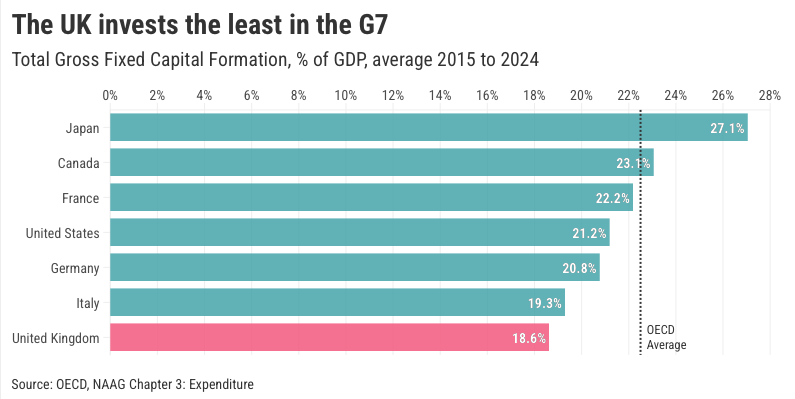
Graph 1: The UK consistently records the lowest business investment rate in the G7.
With this backdrop, Burnham recognises change is required. Early themes of his economic agenda centre around a vision for industrial renewal, regional growth and economic sovereignty. This signals a more interventionist approach to economic revival.
An important pillar of the new administration’s economic framework is to rebuild domestic capability and strengthen security of supply. Focus has so far centered across five sectors of strategic importance: steel, defence, energy, food and farming.
And while grand rhetoric is yet to translate into tangible government policy, early moves to create a (nearly) all encompassing industrial department - through the establishment of the Department for Business, Innovation, Science and Trade, the formation of No.10 North, the devolution agenda and Burnham’s new regional tax sharing plans - reflect the new PM’s drive.
But our call on Burnham’s government is to put one particular sector ahead of them all. A foundational sector and bloodline to all other sectors: critical minerals.
While some may argue in defence of recent UK action on critical minerals, little has actually been achieved. Years of ministerial churn and successive strategies have proved no help to the UK’s security or resilience of supply.
There has been limited certainty around focus, no diversification from a concentrated and vulnerable dependency on China (see graph 2), and domestic capability has failed to secure much-needed public investment. The UK has fallen behind competitors in the “race” to resilience.
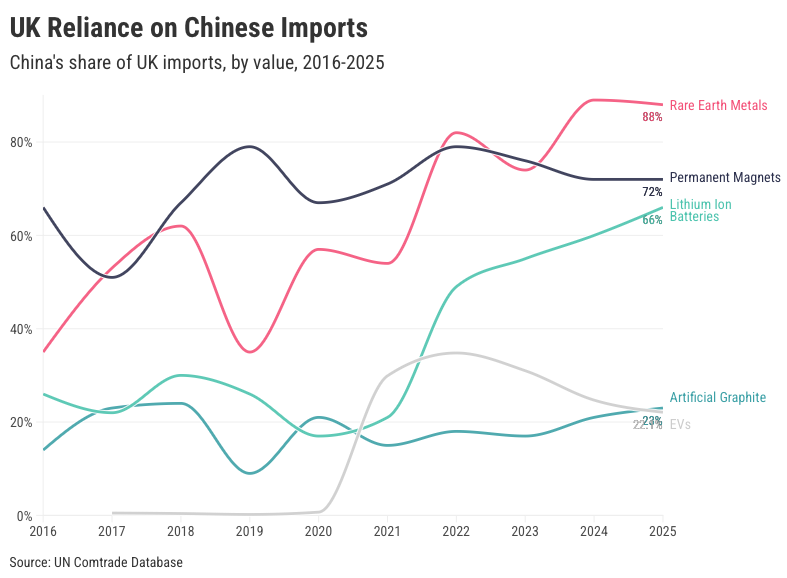
Graph 2: UK dependence on China for critical minerals and related supply chains remains significant.
If Burnham is serious about his vision for economic sovereignty, his first credible action will be to drive forward a targeted, proportionate and realistic approach to the UK’s critical mineral sector. This includes:
A reality check on where the UK should focus efforts to strengthen domestic capability in the critical minerals value chain.
A more selective approach to place-based industrial strategy - narrowing focus from the nine critical mineral clusters to a short-list of five centres of excellence.
The introduction of a Critical Minerals Regulatory Sandbox to allow the sector to test innovation across the life cycle, under controlled conditions and to high standards.
Better match the UK’s international partners financial commitments to domestic critical minerals capability, including efforts to crowd-in public-private investment.
The translation of political declarations with key trading partners into practical commercial partnerships, strengthening security of supply with international producers.
Below, we set these out in turn:
Stop trying to do everything.
Narrow domestic production to where the UK has a genuine comparative advantage, global strategic demand is greatest, and what capability we can leverage to advance our international policy.
The UK’s critical mineral list includes 33 raw materials, plus 17 rare earth elements. That is a lot of minerals identified as vital to the UK economy, energy transition and national security, but whose supply chains are vulnerable to disruption.
The issue being that the UK currently only produces around 6% of overall critical mineral needs domestically - limited to the extraction of small amounts of tin ore in Cornwall, tungsten in Devon and some large-scale extraction of structural metals such as iron and aluminium.
In other words, the UK is heavily import reliant. China has a near monopoly in the global extraction, refining and processing of critical minerals (over 75% in some materials), with a track-record of imposing export restrictions to delay and deny trade partners access to these strategic goods.
The UK’s strategic objective to reduce global dependence and increase domestic capability is thereby warranted. But the approach so far has been too widespread: a lack of discipline and precision as to where and what the UK should focus to drive advantage, regulatory reform, and investment.
Successive strategies have name checked every mineral under the sun as a priority for domestic production, promoted all corners of the country as critical minerals clusters, and presented the UK as capable across the entire value chain. Bluesky thinking at its finest.
As the new PM takes the reins, he needs to reassess the UK’s geological strengths, weigh that up against global demand and how we can leverage our international standing.
That means being much more specific as to the realities of extraction of tungsten, tin or rare earth elements (REE) - the minerals driving growth sectors such as EVs and semiconductors. If you consider global reserves for REE (Graph 3), the UK comes nowhere near close to the top ten countries, with China dominating in resources. Domestic extraction of REE is therefore unlikely to be where the UK can gain advantage.
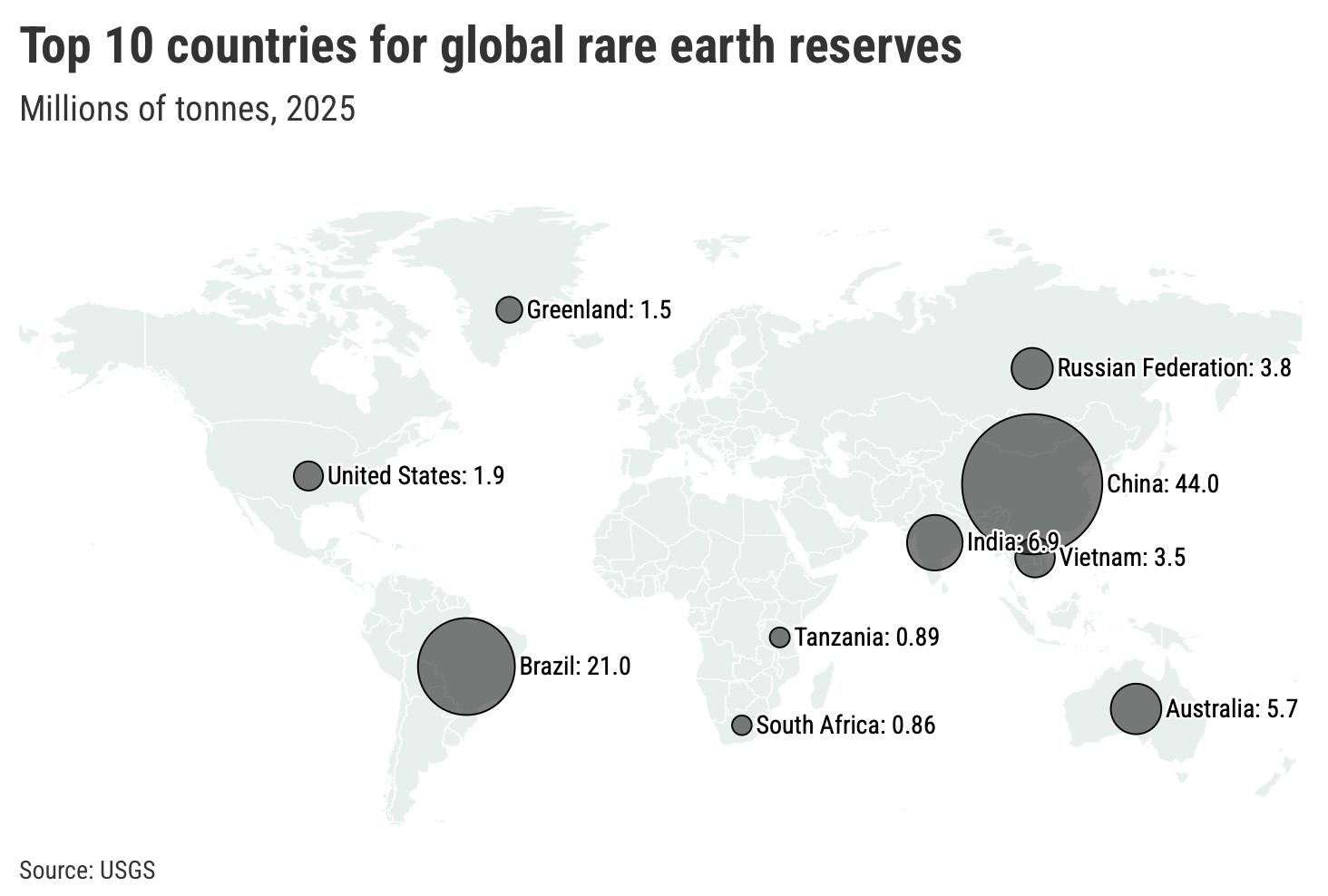
Graph 3: China, Brazil, India, Australia and Russia have the greatest rare earth mineral reserves globally.
There is also a strong argument to be made that the UK has fallen so far behind its comparators that investment in domestic mining capability will not make any material difference to supply chain resilience. In effect, we are too late to the game.
So the UK’s best bet may be a total shift in focus to efforts downstream - around refining, recycling and circular economy innovation - playing more naturally to the UK’s USP in research and development. This is arguably where the UK may be able to gain the greatest economic and strategic advantage.
While the UK may currently lack the mid-downstream ‘muscle’ to do anything with the raw materials mined, we do have world-leading research capability, advanced engineering expertise, strong financial markets and high environmental standards. It seems like a no-brainer to double-down on natural strengths to build capability for strategic advantage.
But all this requires greater discipline, prioritisation and analysis. An omission in critical mineral policymaking so far.
Burnham must move quickly to instruct a much more comprehensive economic assessment of what minerals are feasible for extraction, the benefits of focusing on processing or refining materials, and ultimately work to prioritise where the UK is best placed to focus domestic efforts to strengthen its economic sovereignty and gain comparative advantage.
Stop trying to be everywhere.
Burnham has argued for place-based industrial strategy. So deliver that. Make the difficult choices, pick the winners and consolidate the losers.
Such articulation and precision to where the government should dedicate efforts should also be extended geographically.
In the current Critical Minerals Strategy, nine sector clusters are identified as critical mineral centres of excellence. These are Aberdeen, Belfast, Birmingham, Cornwall, Devon, County Durham, Fort William, South Wales and Teesside.
Ultimately, this covers all corners of the country. It’s a scattergun approach of trying to please everyone rather than deliver results. And it does not drive investment or business confidence.
If the PM is serious about a place-based industrial strategy, he will recognise the need to be much more selective in the number of ‘critical mineral clusters’, reducing the number by some margin.
This means a proper assessment as to which projects across the country are most commercially viable, which regions genuinely have advantage across the value chain, and each region’s wider capability and expertise. Unfortunately, the PM has to pick winners and losers.
But that is what our international partners have done - and they are reaping the benefits.
Australia has shifted focus from extracting raw ore to strategic investment in minerals where it possesses geological abundance and importance, such as nickel, cobalt and rare earth elements.
Canada has also taken a disciplined approach. It has concentrated efforts on leveraging mineral reserves in Ontario and Quebec to build integrated battery supply chains, underpinned by substantial public investment, streamlined regulation and cooperation with the US.
Both countries have identified where they possess genuine advantage and aligned policy, regulation and investment accordingly.
The UK must do the same. Without a more coherent approach, the UK will continue to spread public resources too widely, delay commercial development and weaken investor confidence. This risks causing lasting damage to the UK’s economic security.
A strong and robust industrial strategy is about making difficult choices.
Fix the regulation. Invest seriously.
The UK’s biggest constraint is its operating environment. Cut the red tape, unlock the finances, and create the conditions for businesses to win.
Regulation has become one of the UK’s biggest competitive disadvantages. Lengthy planning processes, fragmented environmental permitting, complex waste classifications and inconsistent application of circular economy regulations create costs, delays and undermine commercial confidence.
As a result, promising domestic critical mineral projects spend years navigating regulatory hurdles before even achieving commercialisation. After all, it has taken Cornish Lithium ten years and counting to achieve commercial production.
If Burnham is serious about industrial renewal and economic sovereignty, regulatory reform has to be executed.
And this isn’t an argument for lowering standards. It is about creating a more conducive environment for businesses to succeed. That means a regulatory framework that is proportionate, predictable and coordinated - giving investors confidence that domestic projects can be delivered within commercially realistic timescales.
From conversations with UK firms focused on critical metals recovery, particular attention should be given to modernising waste and circular economy regulation. As innovative recycling technologies emerge, regulation must evolve alongside them, ensuring that businesses can recover valuable materials safely and efficiently rather than being constrained by outdated definitions and permitting regimes.
As the government continues to introduce regulatory sandboxes for almost every other sector, Burnham should introduce a Critical Minerals Regulatory Sandbox. This would allow regulators and businesses to work together to test innovation across the life cycle, under controlled conditions and to high standards.
But improved regulatory conditions alone will not unlock the UK’s critical mineral potential. Burnham must match ambition with proportionate investment.
In June, Starmer committed £50 million for domestic critical mineral projects across the life cycle. This builds on around £200 million of government support previously committed. While the latest announcement signals intent, it falls well short of the scale of investment being deployed by our international allies as evident in graph 4.
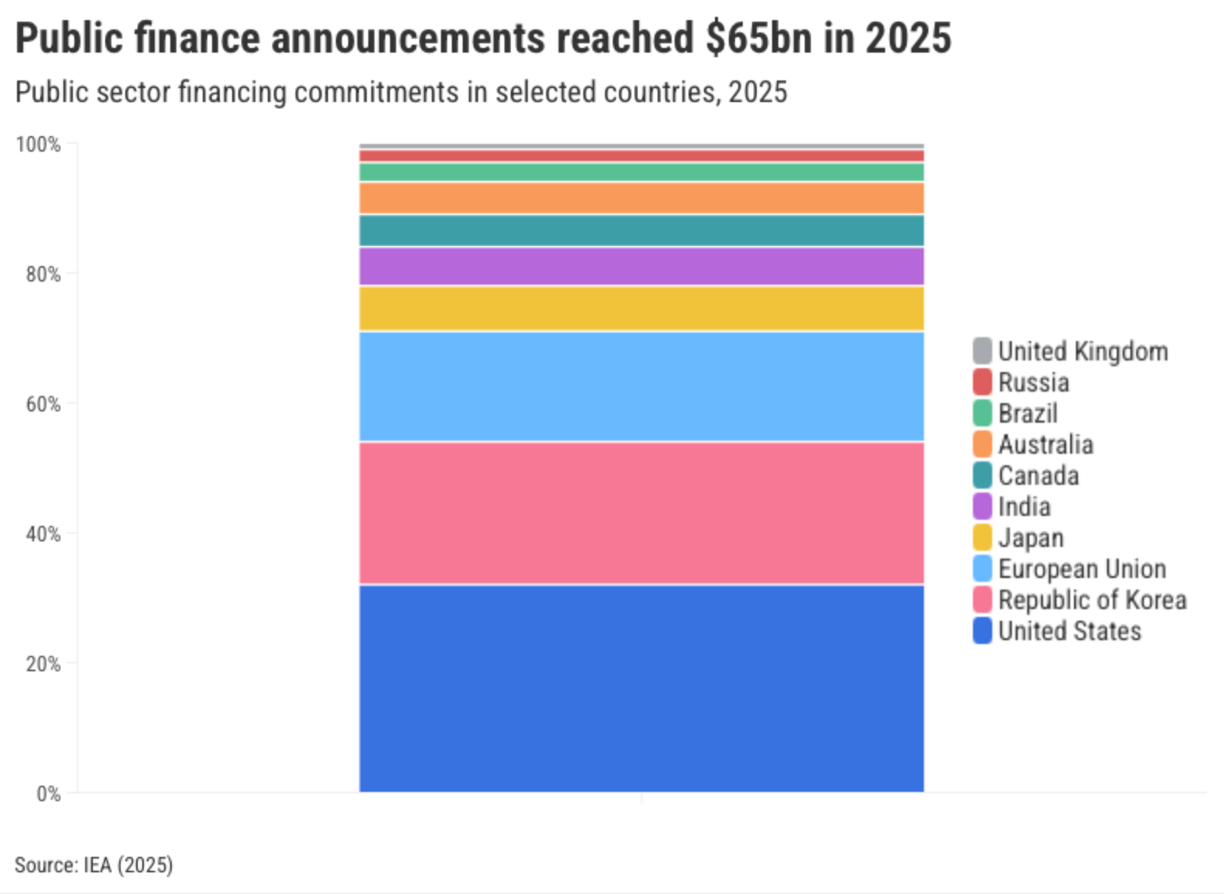
Graph 4: The UK falls well behind international partners’ investment in critical minerals.
The US federal government has publicly committed over $10 billion for critical mineral projects, and Australia and Canada both over $6 billion. The general scale of the investment gap is clear.
If critical minerals really are identified as foundational to the UK’s industrial strategy, government investment has to reflect that. And while the purse strings may be tight, it is not always about spending more, but spending smarter. Public capital should be deployed strategically to reduce commercial risk and crowd-in significantly greater private investment.
For example, the National Wealth Fund’s £24 million investment in Cornish Lithium formed part of a £54 million total commitment, demonstrating how public capital can be used to de-risk projects and crowd in private investment. The Government’s new £25 million Critical Minerals Accelerator also points in the right direction, explicitly seeking to de-risk projects close to commercialisation and crowd-in private investment.
The opportunity now is to apply this model more strategically - concentrating public finance in a select number of critical mineral ecosystems where it can unlock significantly greater private investment and accelerate wider growth.
This plays into Burnham’s vision for Good Growth Funds, and reinforces points made earlier. The PM should create a select number of ecosystems where he will use public finance to crowd in private investment that will accelerate growth.
Having been involved in both the Good Growth Fund and now working with Sir John Armitt on the Public Public Partnership Commission - we are not short on ideas of how Burnham can better use public finance to unlock private investment and deliver joint ventures. The same principles should now be applied to critical minerals.
Shift from diplomatic rhetoric to international action.
The UK cannot be self-sufficient in critical minerals. Our greatest strengths are strong and established ties with international allies. Play that to our advantage and work with key partners to strengthen domestic supplies.
While there is nothing to say that when the PM is pushing for ‘economic sovereignty’ he means economic isolation, he does have to display pragmatism when it comes to the UK critical mineral supply chains.
The UK will only increase its security of supply and resilience to shocks through building trusted and diversified supply chains with our international partners. This will simultaneously reduce dependence on China while deepening cooperation with allies who share our economic and security interests.
Successive governments have recognised this challenge and sought to diversify supply chains through a growing network of bilateral partnerships and Memoranda of Understanding with mineral-producing nations.
These agreements may have strengthened diplomatic ties, but in reality, they aren’t worth more than the piece of paper they are written on.
Burnham’s priority must be to translate political declarations towards practical commercial partnerships. That means deploying UK expertise and investment to create formal arrangements with international producers.
The government has to proactively support joint ventures, strengthen export finance for UK companies operating in international markets, and leverage our services economy to support delivery of commercial projects overseas.
That also means putting much more focus on driving forward trade agreements that will unlock and enhance the global critical mineral supply chain. If he is to stick to the 2024 manifesto upon which Labour were elected, Burnham will take a sector-specific approach to trade agreements, thereby prioritising critical mineral agreements, to improve market access, investment, procurement and industrial cooperation.
In reality, this probably means securing deepened partnerships with countries that have both the critical mineral capability and stockpile capacity. Outside of China, this largely means the US, South Korea and Japan.
This is fundamentally what UK economic sovereignty should mean to Burnham. His premiership must be focused on forging new, stronger and more trusted international partnerships that will deliver for the UK economy.
Burnham’s critical mineral delivery test
We do not need Burnham to recreate a new critical minerals strategy. A fourth in a few short years would be foolish. Graph 5 shows the recent acceleration in critical mineral policy making. The diagnosis of the UK’s vulnerabilities is well understood - what we need now is actual delivery.
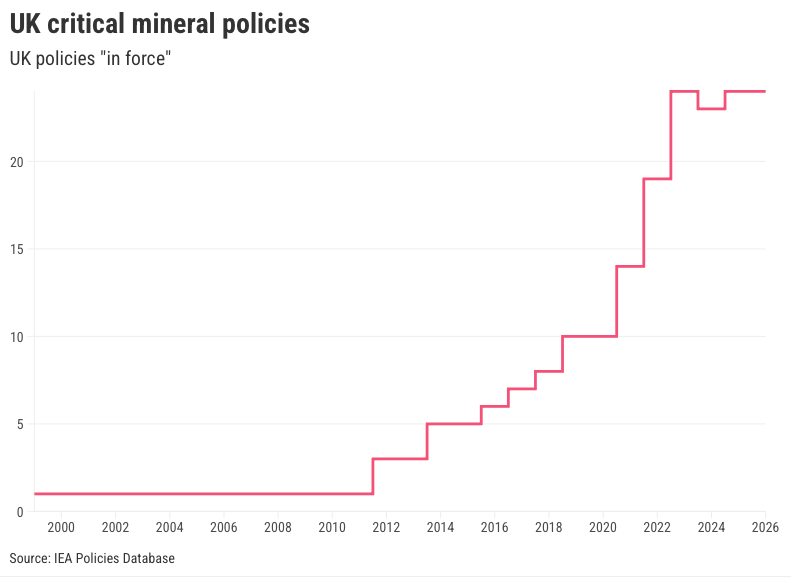
Graph 5: There has been a sharp rise in UK domestic critical mineral policies since the turn of the century.
The real test of Burnham’s premiership should be how he translates his economic vision into targeted, coordinated policy that strengthens domestic capability, reduces strategic dependence and builds resilient supply chains.
It is also how he effectively and maturely prioritises the sectors on which our economic and national security hinges. That means critical minerals.
Over the coming months, we want to see clear communication as to where the Government intends to compete: the specific minerals to be prioritised for domestic production, the technologies it will back to strengthen processing, refining and recycling capability, the regions which will become critical mineral clusters, and the international partnerships that will form the backbone of diversified UK critical mineral supply chains.
Intent must then be matched by action.
Enhanced public investment should be used strategically to crowd-in private capital. Regulation should be reformed to create a more stable operating environment. And Burnham must provide greater confidence that his policy direction will be sustainable beyond this Parliament - something identified as a top risk in our 2026 Political Risk Report.
If the Prime Minister can create the conditions for the domestic critical mineral sector to grow, the benefits will extend across the UK’s industrial base, regions, and our international positioning.
Critically, those five sectors identified by Burnham early in his premiership for strategic prioritisation will prosper.
This is what reindustrialisation and economic sovereignty should look like: making difficult choices, backing them with investment, and a focus on delivery.
