What happened yesterday?
Standing in Liverpool, the city where the prime minister’s grandfather once drove a Tate & Lyle lorry along the docks, yesterday Andy Burnham used his first address to Labour’s annual conference since replacing Sir Keir Starmer to give the Labour and union faithful a lot of what they wanted to hear.
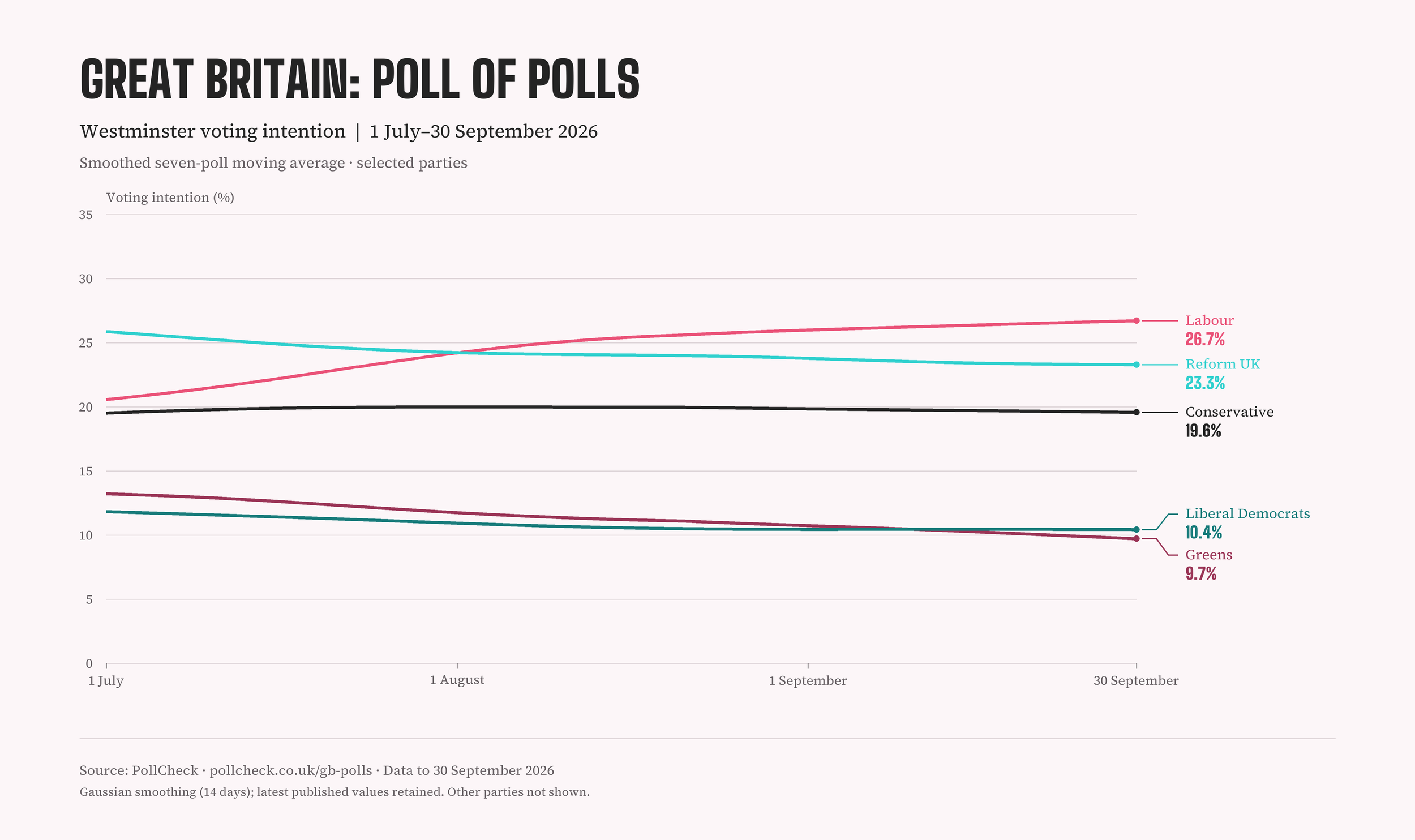
Beneath the emotion - particularly when speaking about his late dad - was a substantial political argument. Nobody can honestly say that all politicians are the same with the current three horse race.
Britain, Burnham said, had been “on the wrong path for a long time”: deindustrialisation, deregulation, privatisation, austerity and Brexit had in his view weakened the country. His answer is a much more interventionist state, greater devolution, more ‘public control’ (which we are not completely sure what it means and neither do ministers from our private conversations) of essential services.
The headline move was the one the bond market had been briefed on that morning. The state pension triple lock will be replaced from April 2030 by a “new settlement” - a sort of two and a half lock - under which pensions continue to rise by at least inflation or 2.5%, but no longer automatically match annual earnings growth but he says they will ‘not fall behind’ wages substantially either (it’s not completely clear how this will work!). The Government says the change will release billions of pounds over time.
Burnham wants to use the savings to help fund perhaps his biggest promise: a National Care Service for England, eventually providing personal care NHS-style, “free at the point of use”, and designed so that nobody has to sell their home to pay for care.
The National Care Service will not arrive in this Parliament and the tweaks to the tripple lock will not fully fund it either. Burnham said work would begin immediately. This policy change actually will most benefit the middle and upper classes as those with very low savings or assets already have their care paid for by the state.
Burnham also promised legislation removing what he called the “ideological ban” on public ownership of water companies, alongside stronger powers over the industry (the government regulators already had to signed off on all the dividends and investment plans of course).
A new publicly owned Great British Grid will compete with private electricity network operators and seek to tackle the long waits businesses and infrastructure projects face for grid connections. It is hard to see the public sector acting with more pace and dynamism than the private sector in any area of the economy currently so we will see how this takes shape.
Housing featured prominently too: more council homes; restrictions on Right-to-Buy for newly built council housing; greater intervention against persistently poor private landlords; and measures intended to make buying a first home easier (a reprise on the Help to Buy Equity Scheme, now called Your First Home).
There were repeats of previously announced immediate cost-of-living measures. VAT on domestic electricity will be cut to zero in Great Britain for six months and the £2 bus-fare cap extended across England throughout 2027.
And on the EU, Burnham went considerably further than Labour had previously been comfortable doing. “Brexit has done more harm than good,” he said. He stopped short of advocating rejoining the EU, but gave those vibes and promised to use a UK-EU summit later this year to consider Britain’s longer-term relationship with Europe.
Then came the constitutional finale for the conference hall. Labour’s next manifesto will commit to changing the voting system, with a National Commission on Electoral Reform examining the alternatives to first-past-the-post.
Burnham linked electoral reform directly to political instability. Britain, he argued, cannot continue with a system capable of producing governments with substantial power on relatively small shares of the vote.
How did the media react?
The Labour faithful absolutely loved the speech and it’s hard to disagree that it was very charismatic, personal and passionate. A good speech from a delivery point of view, but others will radically disagree with the content and direction of travel.
“This was a speech for the Labour Party, not the country,” said Conservative leader Kemi Badenoch, arguing that Burnham’s promises would ultimately require higher taxes and accusing him of trying to drag Britain back towards the economic model of the 1970s (which required an IMF bailout).
Nigel Farage focused his attack on pensioners (who turn out to vote in high numbers). Reform would retain the triple lock, he said, presenting Burnham’s change as an attack on older voters and arguing that savings should instead be found elsewhere in government spending e.g. welfare and immigration.
The Financial Times characterised Burnham’s programme as something of a “jam tomorrow” vision: ambitious and politically significant, but with some of its largest promises pushed into a second term. The central question was whether the Government could reconcile those ambitions with its commitment to the fiscal rules.
The Guardian’s Jessica Elgot noted the contrast between an almost euphoric conference hall and the much longer timetable required to deliver many of Burnham’s promises. Rafael Behr (also in the Guardian) pointed to the clear ideological shift and an explicit social-democratic argument that Britain took a wrong turn in the 1980s and that parts of the settlement built since then should now be reversed. Burnham’s view is that many areas of the economy can be improved by the deployment of more civil servants into them.
Bloomberg thought the speech on Tuesday was big on long-term ideas but short on near-term detail “much like Chancellor of the Exchequer John Healey’s speech a day earlier, little was said about where policy could be heading in the near term”.
What about business?
Business reaction was cautious and business didn’t feature heavily in his speech at all.
Burnham repeatedly insisted that greater public control did not mean hostility towards business and talked about tackling the “cost of business”, infrastructure bottlenecks and the conditions needed for private investment.
Markets, meanwhile, did not immediately revolt. Gilts were broadly steady following the speech, helped by Burnham pairing his interventionist programme with another commitment to the fiscal rules and an emphasis on partnership with private capital rather than indiscriminate nationalisation.
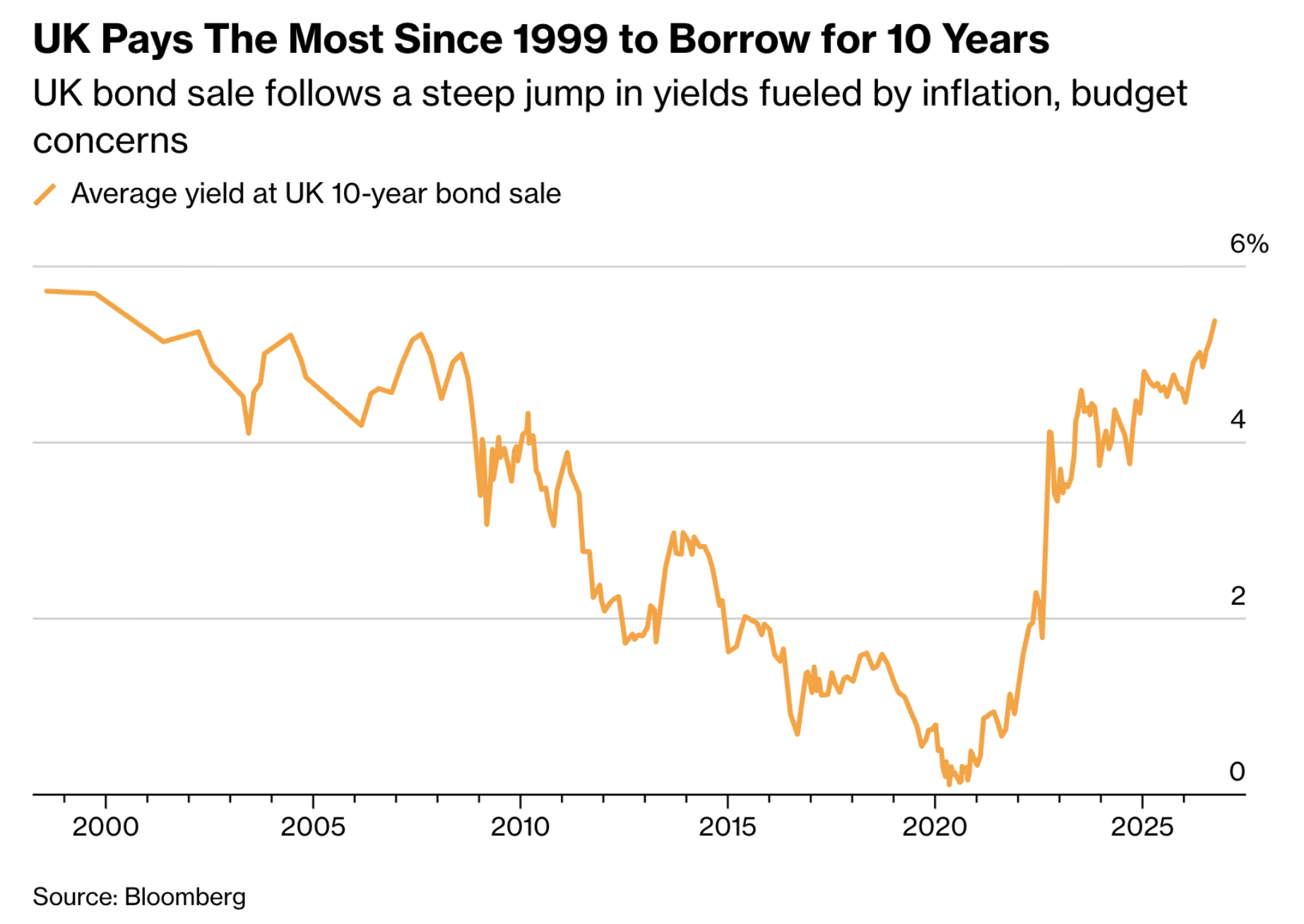
But the backdrop is very difficult. Government borrowing costs remain high (10 year gilts are the highest cost since 1999), leaving limited room for expensive new commitments without significant tax rises. That is why business and investors are likely to be less interested in the ambition of Burnham’s programme and more interested in the mechanics of paying for it. Are they going to be the target?
Burnham’s argument is not simply that the government should spend more. It is that the settlement between citizens and the state needs changing: essential infrastructure should be subject to “greater public control”; Whitehall should push its power to cities and regions; government procurement should support domestic industrial capacity; and the state should try and intervene earlier to prevent problems rather than paying for their consequences later.
A warmer relationship with Europe would be welcome by many businesses but risks reopening the Brexit divide and there are questions of how it passes the ‘Makerfield test’? And what will the EU extract in return?
Greater public control invites questions about cost, compensation and implementation. It may also cool much needed private investment in the UK.
On Heathrow expansion the Prime Minister is weighing up both sides of the discussion.
On planning and infrastructure delivery he says he wants to go further continuing the reforms of Starmer.
On housebuilding he has brought back and changed the name of Help to Buy Equity Scheme with a newly launched ‘Your First Home’ product.
What’s coming next?
The immediate test comes on 28th of October, when Chancellor John Healey delivers his first Budget. In March 2026 the OBR suggested the UK had a ‘fiscal headroom’ of £23.6bn which has now been estimated at around £10bn, showing a £13.6bn worsening of the position.
Markets will want to see how the numbers behind Burnham’s programme fit together: how much pension reform genuinely saves (although that kicks in next parliament), what can be delivered within the fiscal rules, and who is paying for it all.
For businesses, many boards are rightly thinking that greater “public control” could mean anything from tougher regulation and new public competitors to outright public ownership (very unlikely given the costs).
Politically, Burnham has opened several fronts simultaneously (and on purpose).
Changing the pension settlement gives the Conservatives and Reform an obvious line of attack among older voters.
Electoral reform could divide Labour’s own MPs and the unions who have been very against it in the past, but it opens a coalition opportunity with the Lib Dems.
But those individual policies are also part of the point.
Burnham used Liverpool to make an argument that Britain’s problems are interconnected – weak growth, poor infrastructure, expensive housing, regional inequality and struggling public services are symptoms of an economic model that he says is not working.
His answer is three things: public control, devolution and public sector reform, while insisting that this can coexist with fiscal discipline and a thriving private sector. The question for many businesses is whether he will do anything to ‘make their lives just a little bit easier’ as he has done with the public.
By the end of the year we will see the 10-year plan setting out more detail on his three areas of focus.
We will also see the ‘Rewiring the State Delivery Plan’ about the next steps in the devolution journey.
The Conservatives open their party conference this weekend and will feel slightly encouraged by their modest gains in recent polls but intimidated by facing one of the best communicators as prime minister since Tony Blair and a Reform party with a £72m war chest. We continue to effectively be in a three horse race between Labour (+5% over the last year), Reform UK (-6% over the last year) and Conservatives (+3% over the last year).